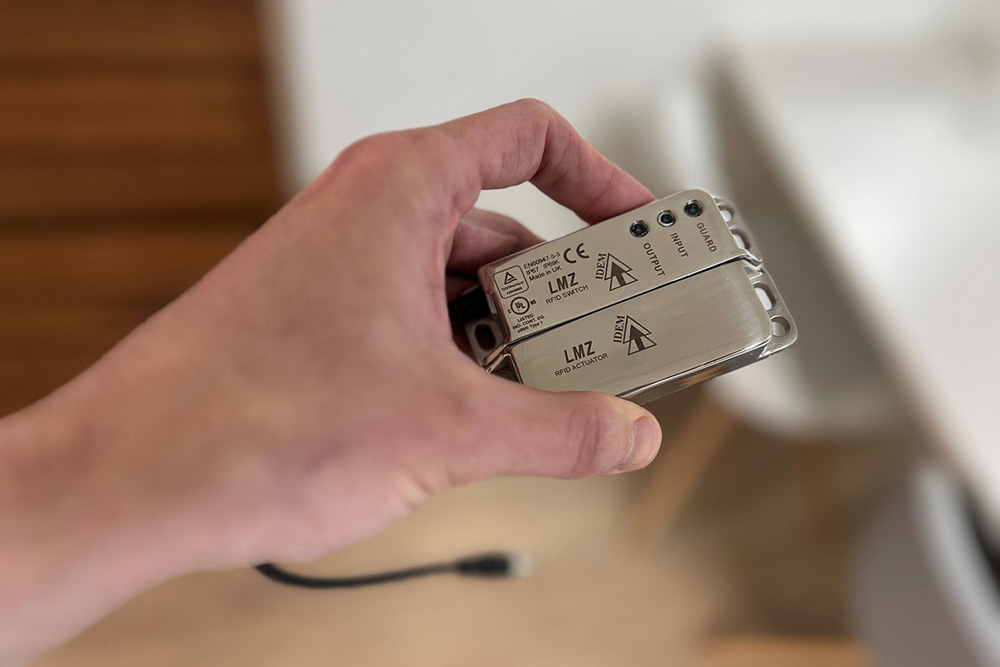
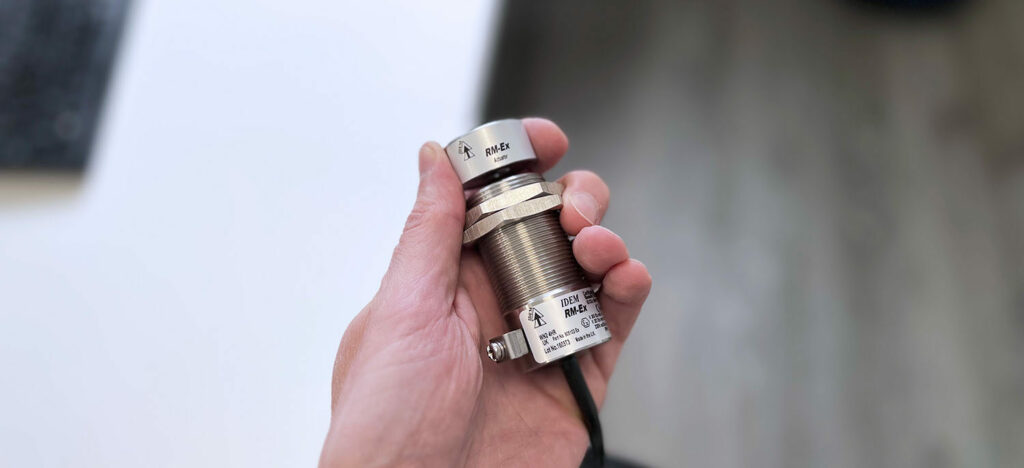
Stainless steel technically superior
Stainless steel offers benefits beyond its purchase price. It is the ideal choice for demanding environments. In addition, stainless steel brings several advantages over plastic or die-cast safety switches. Listed below are the benefits:
- Resistant to chemicals and high temperatures
stainless steel resists a wide range of chemicals and high temperatures, making it ideal for production environments that regularly encounter cleaning agents, harsh substances or high temperatures. Plastic and die-cast can easily degrade or distort in such conditions, leading to faster wear and replacement needs. - Stronger and more durable
Also, stainless steel is much stronger than plastic or die-cast, which makes it resistant to mechanical stress and shock. This means that a stainless steel switch will last longer, even under heavy use, whereas plastic and die-cast can break or damage more quickly. - Longer maintenance-free
The advantage of stainless steel is that it requires less maintenance compared to plastic or die-cast. It resists wear and tear, which means less frequent maintenance. This means lower costs for replacements, maintenance and downtime.
Looking beyond the purchase price
Stainless steel safety switches are designed for environments where reliability is essential. Think wet areas, regular chemical cleaning or mechanical stress. In situations like these, the difference in service life between stainless steel and plastic or die-cast is huge. And that has a direct impact on your operating costs. Because every replacement involves more than just the price of the product. Consider:
- Machine and production line downtime
- Scheduling a service technician
- Time loss for inspection and restart
And that is often more expensive than the additional cost of a stainless steel alternative. A stainless steel switch simply doesn’t need to be replaced as often. And that makes all the difference.
Four price examples: how big is the difference really?
Contactless safety switches with RFID & OSSD
- MPZ (plastic) vs. MMZ (stainless steel)
- Surcharge: €75.73
- Stainless steel remains reliable under heavy use and frequent cleaning.
Safety drawstring switches
- GLS (die-cast) vs. GLS-SS (stainless steel)
- Surcharge: €137.63
- Ideal for dusty or humid production environments.
Interlocked safety switches
- KL-P (plastic) → KLM (die-cast): +€30,51
- KLM (die-cast) → KL3-SS (stainless steel): +€251.80
- A bigger price difference, but also a big difference in maintenance needs.
Magnetically interlocked safety switches
- MGL-P (plastic) → MGL-M (die-cast): +€20,60
- MGL-M (die-cast) → MGL-SS (stainless steel): +€108.46
- Stainless steel offers better sealing and less wear with daily use.
Lifetime value
Buyers and engineers who compare only the unit price are missing the bigger picture. The total cost over the lifetime, known as lifetime value, is much more relevant:
- Fewer replacement moments
- No additional costs for service and downtime
- Longer uptime of your machinery
For machines that are regularly dry-cleaned or in demanding production environments, stainless steel is rarely a cost but rather a strategic savings.
When to choose stainless steel?
Consider stainless steel safety switches as your machines:
- Be cleaned regularly with chemical agents
- Be placed in damp, dusty or hygienic environments
- Difficult to access for maintenance
- Being critical to the continuity of your production process
Get a no-obligation assessment of your situation
Wondering what stainless steel can do for your situation? Share your current application, the expected number of switches on an annual basis and the current unit price. We will calculate the difference for you and send a free test sample along for testing purposes if relevant.
Don't wait until it's too late
Discover essential insights and practical tips to avoid the five most common mistakes when choosing safety switches. Avoid costly decisions with our free whitepaper!