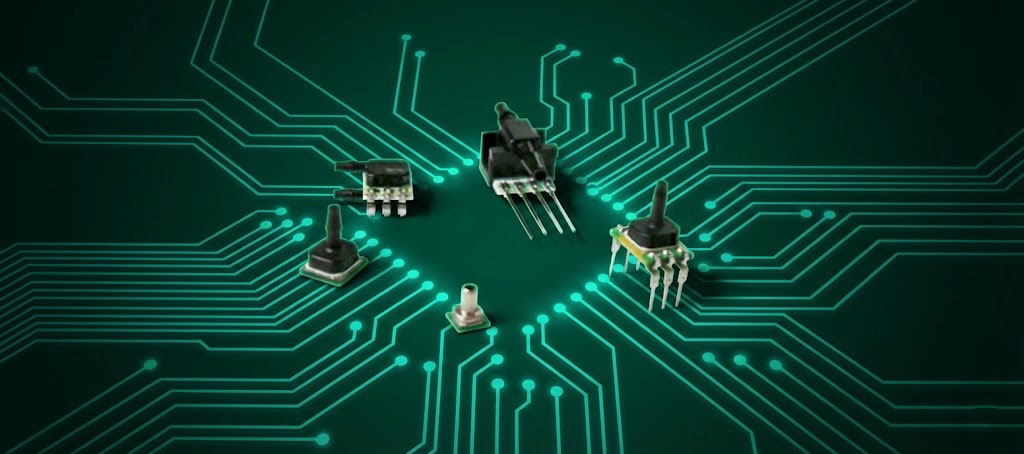
This checklist will help you avoid that, especially in applications where reliability and reproducibility are crucial, such as in medical devices. Not a product overview, but a practical roadmap with the most important selection criteria and common pitfalls when selecting and integrating pressure sensors in machines and devices.
Why pressure sensor selection often goes wrong in practice
Not only what does the sensor measure, but also how does it behave in your system and does that behavior remain stable over its lifetime. In our view, that very consideration up front prevents redesign afterwards.
Pressure sensor vs pressure transducer: which measures what?
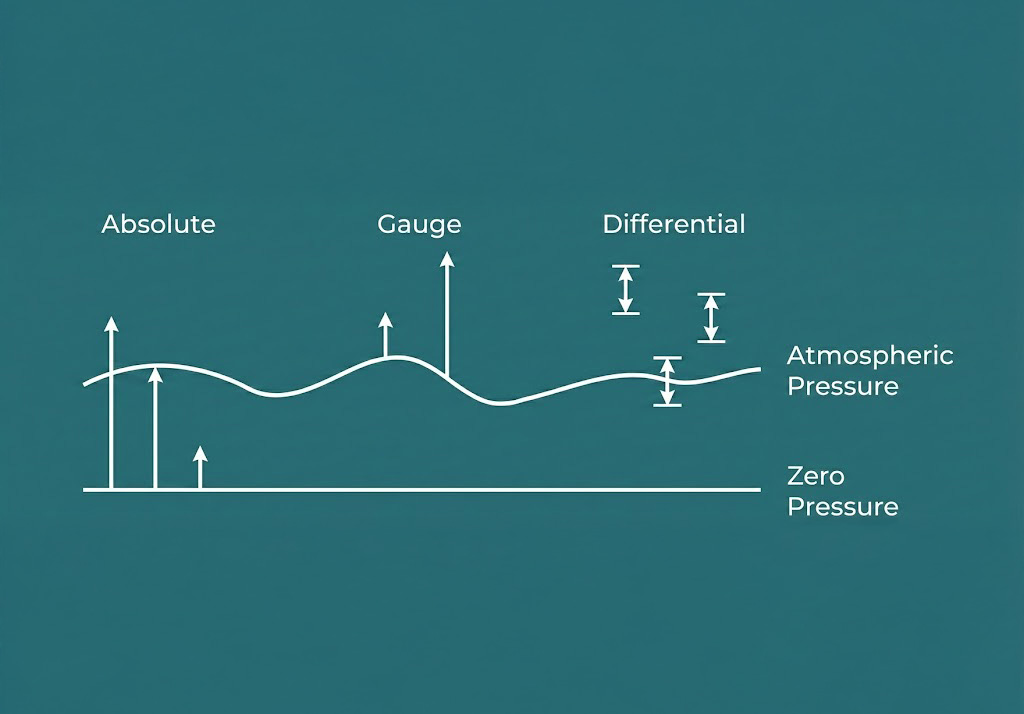
| Type of pressure measurement | What is measured | When do you choose this in embedded designs? |
|---|---|---|
| Absolute pressure | Pressure relative to vacuum | For sealed systems or when atmospheric pressure should not play a role |
| Relative (gauge) pressure | Pressure relative to ambient pressure | In open systems such as pneumatics or fluid pressure |
| Differential pressure | Pressure difference between two points | In flow measurement, filters, level determination or leak detection |
The six decision criteria that are often underestimated
1. Measuring range
2. Output and interface (analog or digital).
Analog is simple and robust, but digital (such as I²C or SPI) offers more resolution and diagnostics. The right choice depends on your controls, error handling and system architecture.
Don’t forget about the power supply voltage here either: does the voltage required from the sensor match the voltage available in the system?
3. Environment and pcb integration
4. Reliability in serial applications
In series production, stability, drift and hysteresis are often more important than peak accuracy. These properties determine whether a design remains scalable without surprises, which is especially important in medical applications where deviations directly impact safety or process quality.
In addition, it is essential to consider the desired quantities in advance. Some sensors are technically perfect but, for example, have a minimum order quantity that may not suit the application.
5. Media Compatibility
Medium, condensation, contamination and pressure spikes directly affect service life. This is sometimes taken into account too late, while it determines long-term reliability. Especially in applications where cleanability, condensation or temperature changes play a role, such as in food-related machinery.
So ask yourself the question: what medium are you going to measure? This is a critical question, as many (board-mount) pressure sensors are only suitable for dry air or non-corrosive gases. If you want to measure liquids, the sensor must specifically withstand this to avoid early failures.
6. Economic feasibility and target price
Embedded and pcb integration as an integral part of your sensor selection
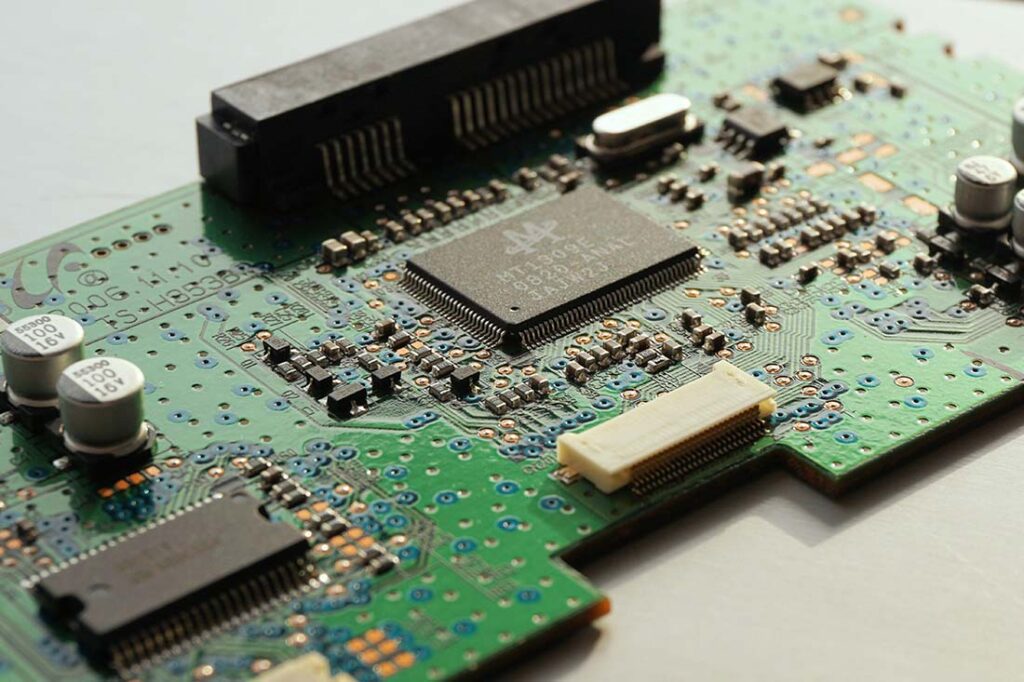
In modern machines and devices, the pressure sensor is usually no longer a separate component, but part of an embedded system. Board-mount sensors are placed directly on the PCB and communicate directly with the controller, as in pressure sensors and pressure transducers for embedded applications. In practice, these are often compact board-mount sensors, such as the Honeywell ABP2 or MPR series. This automatically makes sensor selection also a design choice.
Use cases where sensor selection really counts
Mechanical engineering with dynamic pressure measurements
Medical controllers with digital integration
Compact systems with limited space

Checklist: concrete steps to the right pressure sensor
Use these steps to guide your selection:
Step 1: Define the functional requirements
Step 2: Choose the right output and interface
Step 3: Assess stability and margins of error
Step 4: Evaluate pcb integration and footprint
Step 5: Establish requirements for production and service life
Download our complete checklist as a PDF to easily use these steps in design and review processes.
Need help with your sensor selection?
Are you unsure about the right pressure sensor for your application, or do you want to be sure that your selection remains reliable even in series production? We are happy to work with you based on your specifications and application. You can also browse through our pressure sensors and pressure transducers.

Frequently asked questions about pressure sensor selection
What most often goes wrong when choosing a pressure sensor?
Incorrect measurement range and underestimating stability and drift in serial applications.
What is the difference between absolute and relative pressure measurement?
Absolute pressure measures relative to vacuum, relative (gauge) pressure to ambient pressure.
When do you choose a digital pressure sensor?
When accuracy, diagnostics and stable data integration with controls are important.
Is accuracy more important than stability?
Not always; in serial applications, stability over time is often more decisive than peak accuracy.
What should you look for in pcb integration of a pressure sensor?
On footprint, placement, EMC influences and interaction with other components on the PCB.